
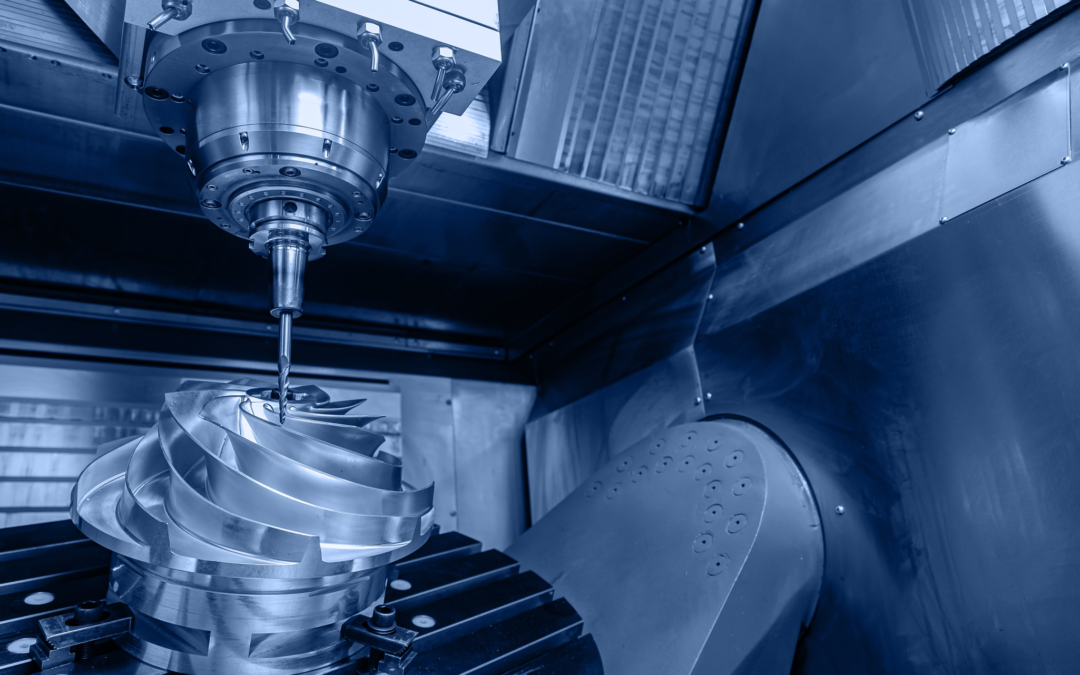
CNC micro-contour finishing has become one of the most advanced and indispensable precision manufacturing methods for producing multi-axis aero-engine fillet transitions. As modern turbine engines evolve toward tighter tolerances, higher stress conditions, and more intricate load paths, the geometry of fillet transitions plays an increasingly crucial role in structural reliability and aerodynamic flow stability. These fillets, which join critical aero-engine surfaces such as blade roots, disk hubs, casings, and flow-path contours, must be machined with extreme accuracy to avoid stress concentration points and premature fatigue failures. Traditional machining methods often struggled to maintain consistent curvature blending at micro-scale radii, especially along multi-axis transitions that require smooth, uninterrupted geometry. CNC micro-contour finishing resolves these limitations by leveraging ultra-precise motion control, adaptive toolpath algorithms, and real-time compensation technologies that produce uniform micro-level curvature transitions. This approach ensures that every fillet meets stringent aerospace specifications while enhancing overall engine performance, component longevity, and structural resilience.
The challenges of machining multi-axis aero-engine fillet transitions stem from the complexity of their geometry. Fillets often vary in radius, depth, and directional flow as they blend two or more surfaces with different curvatures. Achieving a smooth, mathematically correct fillet along these transitions requires precise multi-axis synchronization and accurate tool orientation. CNC micro-contour finishing employs advanced interpolation techniques designed specifically for micro-radius blending. Instead of approximating the curvature with segmented paths, the technology uses true 3D contour generation that follows the engineered geometry with micron-level tolerance. Real-time feedback loops within the CNC controller continuously monitor spindle load, tool deflection, and axis positioning accuracy, applying auto-corrections to maintain geometric fidelity. This results in exceptionally smooth fillet surfaces with minimal irregularities—an essential factor in preventing crack initiation and reducing stress intensity during cyclic loading in aero-engine environments.
A key advantage of micro-contour finishing is its ability to maintain consistent material removal rates across highly curved or tightly blended transition zones. These zones often create uneven cutting forces that can lead to chatter, edge burrs, or surface deviations when using traditional milling techniques. With micro-contour finishing, CNC systems employ constant-force machining strategies and adaptive feed modulation to maintain stability across complex curvature changes. This is particularly valuable when machining high-strength aerospace alloys, such as titanium and nickel-based superalloys, which respond poorly to variations in cutting pressure or thermal accumulation. The micro-contour process ensures steady chip formation, controlled heat distribution, and reduced tool wear even under challenging material conditions. This not only preserves surface integrity but also increases tool longevity and consistency—reducing overall machining costs while ensuring aerodynamic and structural uniformity across every fillet profile.
Beyond precision and stability, CNC micro-contour finishing significantly enhances production efficiency. Historically, multi-axis fillet transitions required a combination of roughing, manual polishing, and multi-stage finishing cycles. Manual polishing is especially problematic because it introduces variability and can distort engineered profiles. Modern micro-contour finishing eliminates these issues by performing all finishing operations through coordinated multi-axis movements in a single programmed cycle. High-accuracy probing and in-process metrology validate the geometry at critical intervals, allowing automated adjustments without interrupting the machining sequence. This seamless workflow reduces the number of setups, minimizes handling time, and ensures that fillet surfaces are reproduced consistently across large production batches. Such efficiency is essential in aerospace manufacturing, where each component must meet strict certification standards and any deviation can significantly delay assembly schedules.
Surface integrity remains one of the most important benefits of CNC micro-contour finishing for aero-engine applications. Fillet transitions are zones of concentrated mechanical stress, thermal gradients, and vibrational energy during engine operation. Even microscopic defects—such as tool marks, unblended curvature points, or residual stresses—can propagate into cracks under high-cycle fatigue conditions. Micro-contour finishing produces exceptionally smooth surfaces with superior micro-texture uniformity and minimal residual stress. The combination of ultra-fine tool engagement, optimized coolant flow, and precise cutting kinematics ensures that the resulting fillet transitions exhibit superior fatigue resistance and aerodynamic smoothness. These high-quality surfaces reduce local turbulence, improve thermal stability, and contribute to more efficient load distribution across rotating and static engine components. In turn, this supports longer component lifespans, reduced maintenance intervals, and improved overall engine reliability and performance.
Looking ahead, CNC micro-contour finishing is expected to become even more advanced as digital manufacturing technologies continue to progress. The integration of AI-driven finishing strategies, real-time simulation through digital twins, and next-generation sensor-embedded tooling will allow CNC systems to adapt dynamically to material behavior, tool wear, and machine conditions. AI-assisted path optimization will generate custom toolpaths for each individual fillet, optimizing curvature blending based on stress analyses and aerodynamic models. Meanwhile, digital twins will simulate the entire finishing process, predicting potential geometrical deviations and suggesting corrective actions before machining begins. With these advancements, manufacturers will be able to produce even more complex and demanding fillet geometries without compromising accuracy or efficiency. In the aerospace industry—where innovation, precision, and safety are interconnected—the continued evolution of CNC micro-contour finishing will play a key role in enabling next-generation engine designs, improving performance metrics, and ensuring long-term operational reliability for commercial and military aviation technologies.