
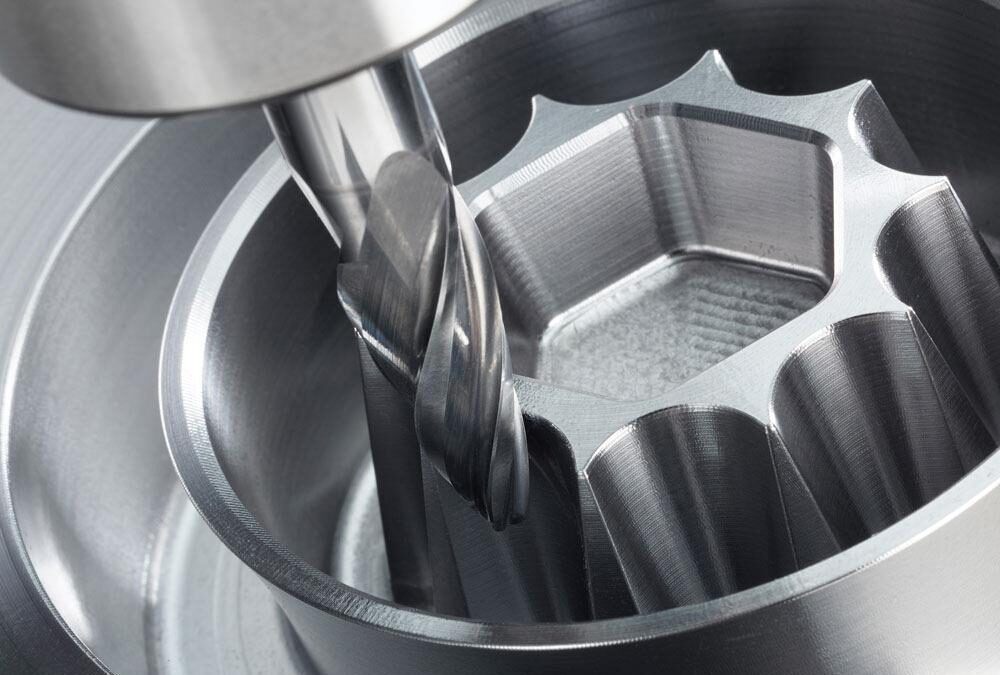
CNC precision web-cavity pocketing has become a defining capability in the modern aerospace and turbomachinery manufacturing landscape, especially as turbine rotor bridge designs evolve into more geometrically complex, performance-driven structures. The demand for multi-radius transitions, variable-depth pockets, cross-sectional contouring, and structurally optimized cavities has pushed conventional machining strategies far beyond their limits. Turbine rotor bridges serve as critical structural linkages between disk, web, and rim segments, absorbing excessive mechanical loads, thermal gradients, and vibrational forces during high-speed engine operation. As engineers introduce lightweighting strategies, advanced internal cavity layouts, and blended multi-radius profiles, the need for accurate, stable, and repeatable CNC pocketing becomes a production necessity. CNC precision web-cavity pocketing allows these rotor bridges to incorporate aerodynamic flow paths, heat dissipation channels, and stress-optimized hollows that would be impossible to achieve through casting or forging alone. Modern engine programs now specify multi-radius cavity architectures with sweeping curvature, asymmetrical geometry, steep undercuts, and compound pocketing sequences. To support this evolution, manufacturers rely heavily on advanced multi-axis CNC cutting platforms, adaptive toolpath algorithms, and high-stability machining centers that deliver micron-level accuracy inside confined cavity geometries. With performance demands rising, CNC precision web-cavity pocketing ensures that even the most complex turbine bridge designs maintain structural integrity, dimensional uniformity, and thermal reliability across continuous operational cycles.
The machining challenges associated with multi-radius turbine rotor bridge cavities stem from the intricate blend zones, directional curvature changes, and non-linear geometric transitions that define the pocket architecture. These cavities often include deep internal geometry, intersecting radii, reverse-curved pockets, and localized reinforcement zones, requiring ultra-precise tool orientation control and dynamic toolpath recalculation. High-fidelity CAD/CAM environments now integrate curvature-guided toolpath strategies that follow the natural flow of the pocket design, ensuring uniform cutter engagement across all radii—even those that shift mid-surface or blend into sharper transitions. Using five-axis and simultaneous multi-axis machining, cutters can access internal angles and multi-radius channels without inducing taper errors, scallop inconsistencies, or unwanted gouging. Specialized tools such as lollipop cutters, barrel mills, tapered ball-nose tools, and adaptive swarf-milling geometries allow machinists to maintain consistent geometry inside tight cavities without causing tool chatter or acquiring heat-related micro-distortions. The goal is to deliver a continuous, flaw-free internal surface that adheres closely to the structural intent of the turbine bridge design. Through these advanced strategies, CNC precision pocketing eliminates blend-line mismatches, maintains curvature fidelity across radius transitions, and ensures that airflow or stress-flow paths remain aerodynamically and structurally accurate. This level of detail is essential because even a slight deviation in cavity shape can influence overall rotor balance, weight distribution, structural load paths, or dynamic engine performance.
Surface integrity, thermal stability, and structural performance are all dramatically influenced by the quality of CNC pocketing inside turbine rotor bridges. Multi-radius internal cavities must exhibit uniform surface textures, controlled residual stress patterns, and tight dimensional adherence to minimize crack initiation risks and maximize rotor life. To achieve this, modern CNC systems incorporate high-speed spindles, variable-feed finishing strategies, and vibration-dampened machine architectures. These elements work together to reduce tool deflection, stabilize chip load, and maintain consistent radial accuracy throughout the entire pocketing process, even at extreme tool reach lengths. Surface roughness targets for rotor bridge cavities often fall well below Ra 0.8 µm, particularly when cavities serve as aerodynamic or thermal pathways. Achieving such fine finishes requires ultra-fine step-over passes, optimized finishing passes, and micro-polishing tool geometries engineered for smooth engagement in difficult-to-reach areas. Coolant strategies are equally crucial; high-pressure through-tool coolant systems remove chip accumulation from deep pockets and stabilize thermal conditions to maintain metallurgical integrity. Furthermore, aerospace-grade alloys—including Inconel, Waspaloy, and high-strength titanium—require precise control of heat input, feed pressure, and cutting forces to avoid microstructural alteration. Post-machining inspection using laser scanning, CMM probing, and optical interferometry confirms each cavity profile, verifying that the multi-radius transitions remain continuous and consistent with engineered specifications. With turbine engines constantly pushed to withstand higher temperatures, faster rotational speeds, and smaller safety margins, these quality measures ensure that the web-cavity pocketing supports long-term durability and operational stability.
CNC precision web-cavity pocketing also plays a central role in production scalability, repeatability, and cost-efficiency for both development-phase and full-scale aerospace manufacturing programs. The ability to consistently machine multi-radius cavities with identical geometry across dozens or hundreds of turbine rotor bridges is a major performance requirement in today’s global aerospace supply chain. Next-generation CNC centers equipped with automated tool magazines, palletized part-handling systems, inline in-process probing, and AI-driven tool-wear prediction allow manufacturers to maintain stable quality even during long-cycle, unattended machining operations. These smart machining ecosystems rely on a continuous feedback loop between digital twins, real-time sensors, and CAM-based correction algorithms. When a tool begins to wear, the system automatically adjusts feed rates, step-overs, or tool orientation angles to maintain consistent pocketing dimensions. When temperature changes inside the machine enclosure threaten to distort geometric accuracy, thermal compensation systems recalibrate axis positions to preserve sub-micron alignment. These advanced controls dramatically reduce scrap rates, eliminate batch variability, and support aerospace certifications requiring strict dimensional compliance. Additionally, automated metrology integration ensures that each rotor bridge cavity remains perfectly matched to its engineering model, allowing manufacturers to deliver production consistency unmatched by conventional machining approaches. As a result, CNC precision pocketing becomes not just a machining method, but a comprehensive production strategy optimized for aerospace reliability, traceability, and long-term industrial scalability.
Looking ahead, CNC precision web-cavity pocketing for multi-radius turbine rotor bridges will continue evolving alongside the broader technological advancements defining next-generation aero-engine development. AI-assisted CAM programming, predictive machining models, high-rigidity machine structures, advanced spindle cooling technologies, and hybrid machining platforms that combine subtractive and additive manufacturing will push the boundaries of what is possible inside turbine cavity geometries. The rise of adaptive finishing strategies, where machines learn from previous cuts to optimize future toolpaths, will enhance accuracy and efficiency even further. Tooling advancements—such as nano-coated carbide tools, micro-geometry edge enhancements, and high-temperature cutting ceramics—will extend tool life and allow for even finer, more stable cutting performance inside narrow web cavities. Aerospace designers, newly empowered by simulation-based engineering, will continue exploring more aggressive cavity designs, aerodynamic flow channels, and ultra-lightweight rotor bridge architectures. CNC precision pocketing will form the manufacturing backbone that allows these ideas to become functional, structurally resilient engine components. Whether for commercial aviation, military propulsion, or high-efficiency industrial gas turbines, the refinement of multi-radius cavities will continue to play an essential role in reducing weight, enhancing durability, improving thermal performance, and increasing overall turbine efficiency. In an era where engine performance targets grow more ambitious every year, CNC precision web-cavity pocketing stands as one of the most vital technologies enabling the next generation of turbine engineering.