
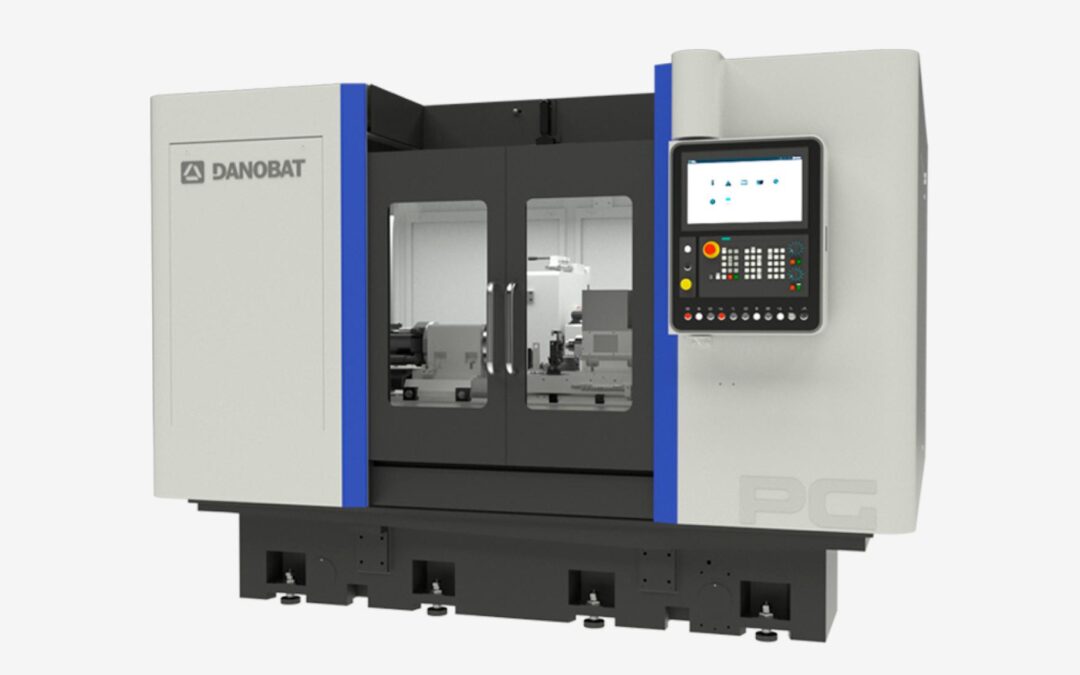
High-accuracy CNC radius-matched milling has emerged as an indispensable manufacturing technology for producing the asymmetric compressor disk channels found in next-generation aero-engine architectures. These channels, which often incorporate variations in curvature, depth, and aerodynamic contouring, play a crucial role in stabilizing airflow, distributing stresses evenly, and ensuring optimal rotor performance at extremely high rotational speeds. As engines continue to evolve toward higher pressure ratios, tighter tolerances, and more complex geometries, traditional milling processes are no longer capable of achieving the precision or consistency required. Radius-matched CNC milling introduces a new level of geometric control, where cutting paths are precisely aligned with the channel’s asymmetric curvature profiles, ensuring exact conformity to the engineered aerodynamic model. With the help of advanced CAD/CAM integration, high-speed interpolation, and automated error compensation, manufacturers can produce channels with exceptional accuracy, uniform surface quality, and highly predictable structural behavior—attributes essential to meeting stringent aerospace standards. This evolution in machining not only enhances component reliability but also reduces post-processing time and significantly improves production throughput.
One of the primary advantages of radius-matched milling is its ability to execute complex 3D contouring operations without resorting to oversimplified toolpaths or multi-stage re-machining. Asymmetric compressor disk channels require the tool’s cutting radius to remain perfectly aligned with the designed curvature as it navigates through varying cross-sections. Any deviation—whether due to tool deflection, machine vibration, or thermal distortion—can create inconsistencies in airflow performance, introduce stress concentration points, or compromise the fatigue life of the disk. To overcome these challenges, high-accuracy CNC systems employ real-time kinematic correction algorithms and multi-axis synchronization, ensuring that every change in curvature is followed with mathematical precision. The toolpath simulation environment also evaluates cutter engagement and angle of approach to minimize radial load fluctuations. By predicting and correcting potential errors before the machining process begins, manufacturers eliminate the need for excessive conservative allowances and ensure that the final part reflects the exact aerodynamic and structural requirements dictated by the compressor design.
Asymmetric channels introduce unique machining stresses due to their irregular geometry, and this makes tool engagement stability a critical factor. High-accuracy radius-matched CNC milling addresses these challenges through dynamic adaptive feed control, constant-force cutting strategies, and advanced tool orientation adjustments. Unlike conventional axial or linear milling approaches, which struggle to maintain stable chip loads in rapidly changing curvature zones, radius-matched milling uses continuous curvature tracking algorithms to maintain consistent contact conditions across the entire profile. This technology is particularly advantageous when machining advanced aerospace materials such as titanium alloys and nickel-based superalloys, which exhibit high hardness, low thermal conductivity, and a greater tendency toward tool-induced microfracture. By stabilizing radial engagement, the CNC system minimizes heat buildup, reduces cutting forces at critical transitions, and maintains predictable wear patterns across the tool’s cutting edges. As a result, not only is surface integrity improved, but tool life is significantly extended—an essential advantage given the cost and precision requirements associated with aerospace-grade milling tools.
High-accuracy CNC milling also transforms the production workflow by reducing the number of machining steps required to achieve the final asymmetric channel geometry. Older milling approaches typically required roughing, intermediate shaping, and multiple finishing passes, each involving separate setups and frequent manual inspections. Radius-matched CNC systems consolidate these stages into streamlined multi-axis operations that can execute roughing, semi-finishing, and precision finishing within a single cohesive toolpath. This reduces tooling changes, minimizes repositioning errors, and ensures that the geometry remains consistent from start to finish. In addition, automated probing systems built into advanced CNC equipment allow in-process measurement and verification, enabling real-time tolerance adjustments and eliminating the risk of cumulative dimensional drift. As compressor disks often require extremely tight tolerances—sometimes within just a few microns—these automated corrections play a vital role in maintaining manufacturing consistency, reducing scrap rates, and ensuring regulatory compliance across high-volume production cycles.
Surface integrity and aerothermal performance are central concerns when machining asymmetric compressor disk channels, and radius-matched milling delivers clear advantages in both areas. Smooth, uniform surfaces reduce friction, lower aerodynamic losses, and minimize the risk of thermal hotspots during engine operation. The continuous radial-motion strategies used in advanced CNC systems eliminate sudden directional changes that typically lead to chatter marks, micro-notches, or texture variations. With proper coolant delivery, optimized cutter geometry, and intelligent spindle-speed modulation, the process produces surfaces that require minimal or no secondary finishing. This is particularly valuable when dealing with deep or narrow channels where manual polishing is impractical or introduces the risk of geometry distortion. The resulting surface quality supports improved airflow uniformity, reduced turbulence, and enhanced fatigue resistance—benefits that directly impact engine efficiency, durability, and safety. Furthermore, smoother surfaces translate into better interfacing with adjoining components such as blades, seals, and thermal barriers, contributing to the overall reliability of the compressor assembly.
Looking toward the future, the capabilities of high-accuracy CNC radius-matched milling are expected to expand significantly as digital manufacturing technologies evolve. Developments in AI-driven toolpath generation, machine learning–based wear prediction, and advanced digital twins will enable CNC systems to analyze asymmetric channel geometries with unprecedented detail. AI algorithms will optimize the toolpath for each unique curvature, spindle condition, and material behavior, creating tailor-made machining strategies for every part. Sensor-integrated cutting tools will provide real-time feedback on vibration, thermal load, and cutting pressure, allowing the CNC controller to adjust motion instantly and prevent deviations before they occur. Meanwhile, digital twin ecosystems will allow engineers to simulate the entire machining cycle—including tool dynamics, machine kinematics, and material responses—without ever touching the physical workpiece. Together, these innovations will push the boundaries of what is possible in compressor disk manufacturing, enabling more complex and aerodynamically efficient designs. As the aerospace industry continues to demand higher performance, lower emissions, and longer service life from its engines, high-accuracy CNC radius-matched milling will remain a cornerstone technology, delivering the precision, consistency, and innovation needed to support the next generation of compressor systems.